
I got tired of pasta sitting heavy after dinner, so I started cooking spaghetti squash on a regular basis. Not as a sad substitute for noodles, but because when you roast it right and load it with real parmesan and a decent sauce, it holds its own. The problem is most people wreck it. They microwave it whole, end up with a watery mush, and swear off the whole thing.
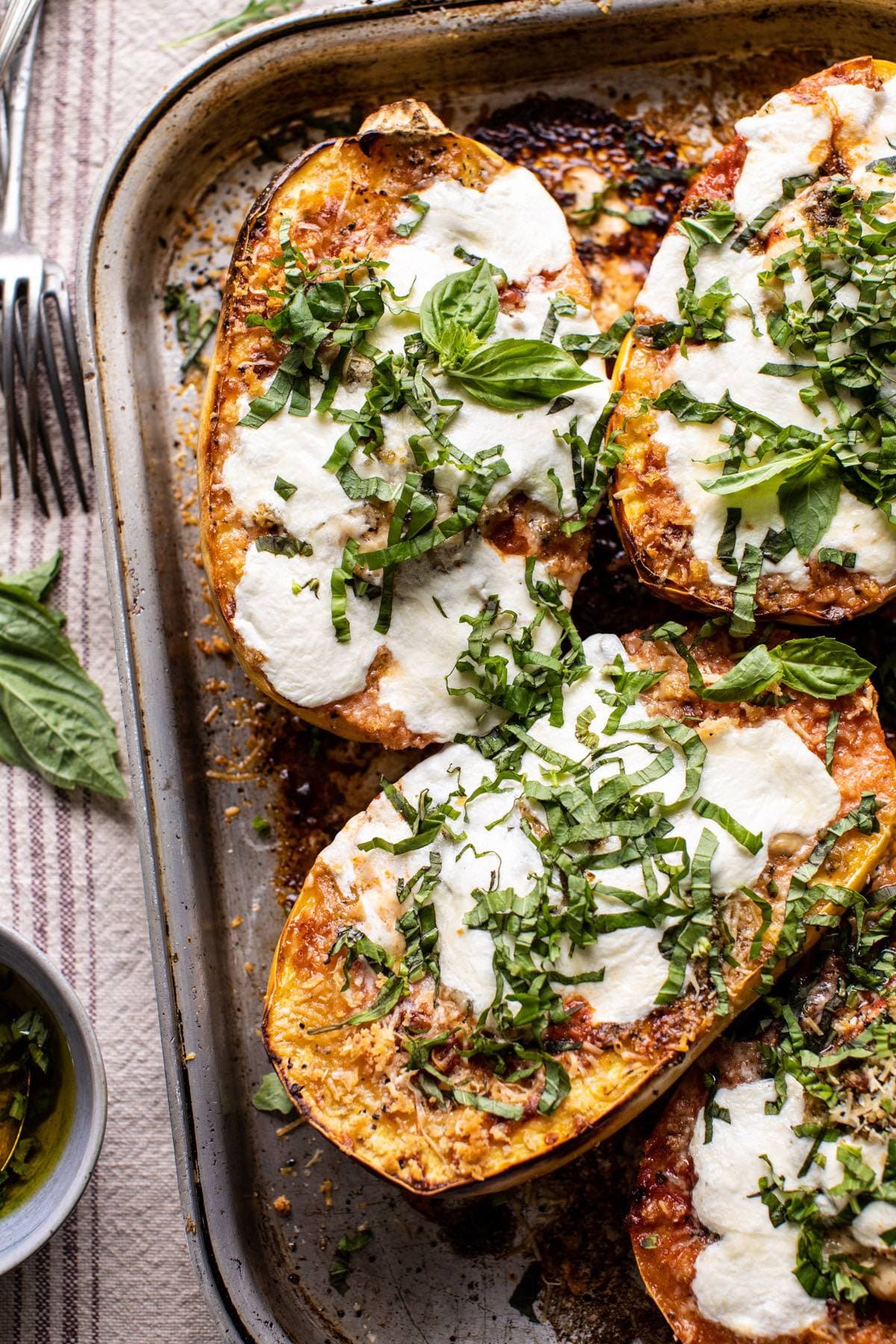
This is the version I make almost every week. It's spaghetti squash parmesan — roasted squash, baked with marinara and three cheeses until the top browns. It eats like a lighter chicken parm without the breading and the fry oil. Takes about an hour start to finish, most of that hands-off while the oven does the work.
Here's everything you need, exact quantities, and the steps that actually matter. I'll also flag the two or three places people go wrong, because those are the difference between "this is great" and "why is my dinner soup."
What you're making, and why this method works
Spaghetti squash is mostly water. That's the whole game. When it roasts, the flesh separates into strands that look like noodles, but if you don't drive off enough moisture, those strands sit in a puddle and the dish turns to slop.
So the plan is simple: roast the squash cut-side down so it steams and softens, scrape the strands out, then bake it again with the sauce and cheese so the second round of heat concentrates everything and browns the top. Two bakes. That's the trick nobody tells you.
I've tried microwaving to save time. It works in a pinch, but you lose the roasted flavor and you get more water. The oven is worth the extra 25 minutes.
Ingredients
This feeds four as a main, or six as a side. I'm giving you exact amounts, but this is forgiving — you can eyeball the cheese and nobody will complain.
For the squash
2 medium spaghetti squash (about 2.5 to 3 lbs each)
2 tablespoons olive oil
1 teaspoon kosher salt
1/2 teaspoon black pepper
For the sauce and cheese
2.5 cups marinara (a 24 oz jar is fine — I'll tell you which ones below)
3 cloves garlic, minced
1 tablespoon olive oil
1/2 teaspoon red pepper flakes (optional, but I always use it)
1 cup whole-milk ricotta
1.5 cups shredded low-moisture mozzarella
3/4 cup grated parmesan (the real stuff, not the shaker can)
1/4 cup fresh basil, torn, plus more for the top
1 teaspoon dried oregano
Tools
A sharp chef's knife (a dull one is dangerous on squash — more on that in a second)
A sturdy spoon for scooping seeds
A fork for scraping strands
A rimmed baking sheet
A 9x13 baking dish, or the squash shells themselves if you want to serve them boat-style
Buy the right marinara or make a quick one
I'm not going to pretend I make sauce from scratch every time. On a weeknight, a good jar is smarter than a bad three-hour project. Look for a jar where the first ingredient is tomatoes, salt is reasonable, and there's no added sugar. Rao's is the reliable one if your store carries it. Store brands vary — read the label.
If you've got 15 minutes and want to make a quick sauce, it's easy. Warm 2 tablespoons olive oil, cook 3 cloves minced garlic for 30 seconds until fragrant, add a 28 oz can of crushed San Marzano tomatoes, a teaspoon of salt, a pinch of sugar, and the red pepper flakes. Simmer 12 minutes. Done. That's better than most jars and cheaper.
Either way, you want the sauce ready before the squash comes out of the oven so you're not standing around while the strands cool.
Cutting the squash without hurting yourself
This is where people either lose a fingertip or give up. Spaghetti squash is hard and round, which means it rolls right when you want to cut it. Two things fix that.
First, microwave the whole squash for 3 to 4 minutes to soften the skin slightly. Poke it a few times with a knife first so it doesn't build pressure. This makes the cut dramatically easier and it's worth the extra step.
Second, cut a thin slice off one long side so you've got a flat base. Now the squash sits flat and won't roll while you cut it in half lengthwise. Use a real knife with weight to it and cut in a controlled rocking motion. Don't stab.
Which direction you cut matters. Cut it lengthwise, pole to pole, the long way. Some people cut it into rings, which gives you longer strands, but it's fussier and I don't think the payoff is worth it for this dish. Lengthwise is simpler and the strands are plenty long.
Roasting the squash
Now the first bake.
Heat your oven to 400°F.
Scoop out the seeds and the stringy pulp from the center of each half with a spoon. Get it clean — those center strings are mushier than the good stuff.
Drizzle the cut faces with olive oil and rub it in. Season with the salt and pepper.
Place the halves cut-side down on the baking sheet. This is important. Face down, the flesh steams against the hot pan and cooks evenly, and the top of the squash acts like a lid. Face up, the exposed flesh dries and toughens before the inside is done.
Roast for 35 to 45 minutes depending on size. You want the flesh tender enough that a fork drags into strands easily but not so soft it's collapsing.
Check it at 35 minutes. Press the skin — it should give a little. Poke the flesh with a fork and try dragging. If it shreds into strands, it's ready. If it's still firm and resists, give it another 5 to 10 minutes.
Don't overcook it. Mushy squash going into the second bake will fall apart. You want strands with a slight bite, because they'll cook more when you bake the assembled dish.
The step everyone skips: drying the strands
Here's the make-or-break move. When the squash is roasted, let it cool for 10 minutes so you can handle it. Then scrape the flesh out with a fork, pulling toward you in long strokes to release the strands. Pile them in a colander set over a bowl or in the sink.
Now sprinkle the strands with about half a teaspoon of salt and let them sit for 10 minutes. The salt pulls water out. Then press down with your hands or the back of a spoon and squeeze. You'll be shocked how much liquid comes out — often close to a cup.
If you want to be thorough, wrap the strands in a clean kitchen towel and wring it out over the sink. I do this when I've got time. It's the single biggest upgrade to the final texture. Dry strands stay distinct and noodle-like. Wet strands turn the whole dish watery no matter how good your sauce is.
Reserve the empty squash shells if you want to serve it boat-style. They hold up fine for a second bake and make a nice presentation. Otherwise, toss them and use the baking dish.
Building the dish
Now you assemble. Keep the oven at 400°F.
Warm the sauce with garlic
Even if you're using jarred marinara, spend two minutes making it better. Heat a tablespoon of olive oil in a pan, add the minced garlic and red pepper flakes, cook 30 seconds until you can smell the garlic. Pour in the marinara and the dried oregano, stir, and let it warm through. This wakes up a jar sauce and makes it taste like you did something.
Mix the squash with sauce and ricotta
In a large bowl, combine the dried squash strands with about 1.5 cups of the warm sauce, the whole cup of ricotta, half the parmesan, the torn basil, and a good grind of black pepper. Fold it together gently. You're coating the strands, not making a paste. Taste it and adjust salt now — this is your last chance before it bakes.
Layer it
Spread a thin layer of the remaining sauce across the bottom of your baking dish so nothing sticks. Add the squash mixture and spread it even. Spoon the rest of the sauce over the top in dollops. Then cover with the mozzarella and the remaining parmesan.
If you're doing boats, divide the squash mixture back into the four shells, top each with sauce and cheese, and set them on the baking sheet.
The second bake
Bake uncovered at 400°F for 20 to 25 minutes, until the cheese is fully melted and bubbling at the edges.
If the top isn't browning to your liking, run it under the broiler for 2 to 3 minutes. Watch it the entire time — broilers go from golden to burnt in about 45 seconds and I've lost more than one dinner to walking away.
Pull it out and let it rest for 5 to 10 minutes before serving. This isn't optional if you want clean portions. Straight out of the oven it'll be loose and runny. Ten minutes of rest and it sets up so you can cut real squares.
Finish with fresh torn basil and an extra dusting of parmesan on top. The residual heat softens the basil just enough.
What to serve with it
As a main, this holds up on its own, but a few things round it out:
A sharp green salad with a lemony vinaigrette cuts the richness of all that cheese.
Garlic bread if you're not trying to keep it low-carb. I usually skip it because the squash is the point.
A protein on the side if you want it heartier — grilled chicken, Italian sausage, or white beans stirred right into the squash mixture before baking. The beans are underrated. They make it filling without any meat.
Common mistakes and how to avoid them
Watery final dish
Almost always a drying problem. You skipped the salt-and-squeeze step, or your squash was overcooked and mushy. Dry the strands. If it still comes out wet, next time roast the squash a few minutes less and squeeze harder.
Bland flavor
Under-seasoned squash and a weak sauce. Salt the strands, salt the mix, and don't use a bad jar. Spaghetti squash is mild, so it needs help. The garlic bloom and a real parmesan carry a lot of the flavor here.
Cheese that won't brown
Too much moisture on top, or you didn't use the broiler. Pat the top gently before adding cheese if it looks wet, and finish under the broiler for that browned, blistered top.
Strands too short
You scraped across the width instead of along the length. Drag your fork the long way, following the direction of the strands, and they'll come out longer.
Making it ahead and storing it
This is genuinely good for meal prep, which is half the reason I keep making it.
You can roast and shred the squash up to two days ahead. Dry it, store it in a container in the fridge, and assemble when you're ready. You can also assemble the whole dish, cover it, and refrigerate it unbaked for a day. Just add 5 to 10 minutes to the bake time since it's going in cold.
Leftovers keep for four days in the fridge. Reheat in a 350°F oven or a toaster oven rather than the microwave if you can — the microwave brings back some of that wateriness. If you must microwave, do it uncovered so steam escapes.
I don't love freezing it. The texture of the squash gets softer and more watery after a thaw. If you're going to freeze, do it before the second bake, and expect a looser result.
Variations worth trying
Once you've made the base version a couple of times, it's easy to riff on.
Spicier: Double the red pepper flakes and add a diced hot Italian sausage cooked into the sauce.
Greener: Wilt a couple handfuls of spinach into the sauce, or fold in roasted broccoli. Squeeze the spinach dry too, or you're right back to the water problem.
No ricotta: If ricotta isn't your thing, swap in cottage cheese blended smooth, or just skip it and use more mozzarella. It'll be a little less creamy but still good.
Pesto version: Stir a few tablespoons of basil pesto into the squash mix along with the sauce. It changes the whole character in a good way.
The numbers, roughly
Per serving as a main, split four ways, you're looking at somewhere around 350 to 400 calories, most of the carbs coming from the squash and sauce rather than flour. Compare that to a plate of baked ziti and it's a fraction of the carbs with most of the same satisfaction. I'm not counting macros religiously, but if you are, this is a dish that earns its place.
Cost runs about ten to twelve dollars for the whole thing if you use a decent jar of sauce and real cheese. That's four dinners. Hard to beat.
Make it once this week and pay attention to the drying step — squeeze more water out than feels necessary. That single habit is what separates the version you'll want to make again from the one you'll write off. Everything else is just cheese and heat, and those are easy.