
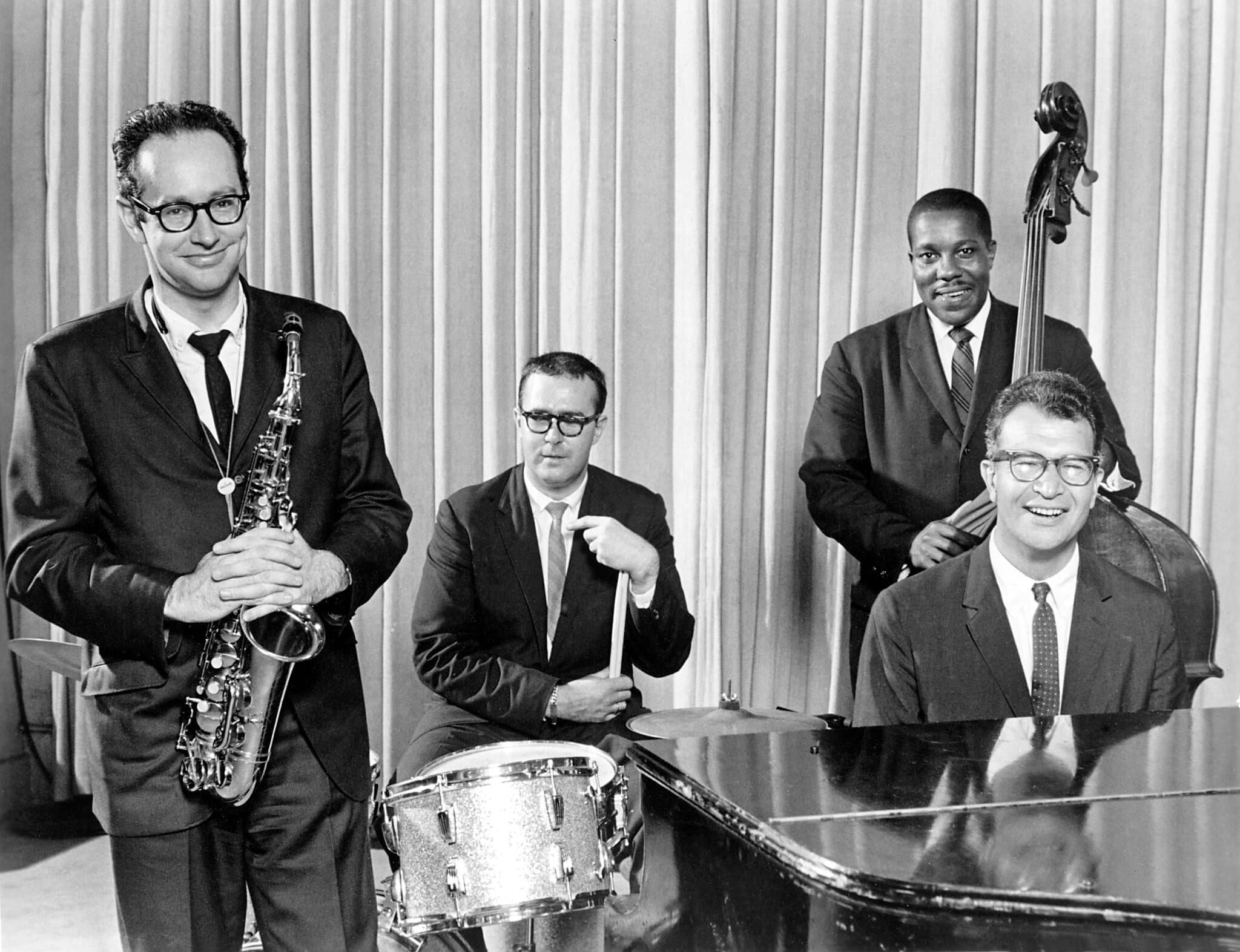
Most people know exactly one Dave Brubeck song, and it's "Take Five." They hum the sax line, maybe tap the odd rhythm without knowing why it feels odd, and move on. That's a shame, because the Dave Brubeck Quartet did something most bands never manage: they made a genuinely weird idea sound inevitable. They took time signatures that music teachers use to torture students and turned them into songs your dad hums while making coffee.
I've been listening to this group for years while I work. There's something about the way they solve problems in real time that I find useful, and not just as background noise. So this is part appreciation, part argument for why the quartet mattered more than its one hit suggests.
Who Was Actually in the Room
When people say "Dave Brubeck," they usually mean the whole quartet, and that's fair, because Brubeck himself would have told you the group was the point. The classic lineup — the one that recorded Time Out in 1959 — was four very different players who somehow fit.
Brubeck played piano. He was the leader, the composer, the guy whose name went on the marquee. His playing was blocky, dense, sometimes almost clumsy in a way that drove purists nuts. He'd hit big chords, stack them up, play against the beat until it felt like the whole thing might tip over. Critics called it heavy-handed. I call it committed.
Paul Desmond played alto saxophone, and he was the opposite of Brubeck in every way. Where Brubeck was dense, Desmond was air. He once said he wanted his tone to sound like a dry martini, and honestly, that's the best description anyone has managed. Light, cool, floating on top of whatever complicated thing the rhythm section was doing underneath. Desmond wrote "Take Five." Brubeck got the fame, but the melody everyone knows came from the sax player.
Then you had the rhythm section. Eugene Wright on bass, Joe Morello on drums. Wright was the anchor — steady, warm, absolutely reliable, the kind of player who makes everyone around him sound better without ever calling attention to himself. Morello was the technician. He could play in five, in nine, in thirteen, and make it swing, which is a much harder trick than it sounds. His drum solo on "Take Five" is one of the few drum solos that non-drummers actually want to hear all the way through.
The Wright Story Worth Knowing
Eugene Wright was Black, and this was America in the late 1950s and early 1960s. Brubeck took the quartet on college tours through the South, and venues would try to make him drop Wright or hide him at the back of the stage. Brubeck refused. He canceled shows. He turned down a television appearance when the network wanted to keep Wright off camera.
He lost money over it. Real money, real bookings. That tells you something about the man that the music alone doesn't. It's easy to have principles when they cost nothing. Brubeck had them when they cost him gigs.
Time Out and the Bet Nobody Wanted to Take
Time Out came out in 1959, and Columbia Records did not want to release it. The whole concept was jazz built on unusual time signatures — music that didn't sit in the comfortable 4/4 that basically every popular song used. The label thought it was a novelty at best, commercial suicide at worst. They almost buried it.
They were spectacularly wrong. Time Out became one of the best-selling jazz records ever made. It was the first jazz album to sell a million copies. "Take Five" became a hit single, which for an instrumental jazz track in 5/4 time is genuinely absurd. Nobody plans that. Nobody could plan that.
What I like about this story is the reminder that the safe call and the right call are often not the same call. Columbia's caution was reasonable. Every reason they had for not releasing it was logical. And they were still wrong, because they were measuring the record against what had already worked instead of against what it was actually trying to do.
I think about that a lot in my own work. Clients ask for the thing that worked for someone else. The proven layout, the safe template, the approach nobody got fired for choosing. Sometimes that's the right answer. But the projects I'm proudest of are the ones where we made a bet that the reasonable people would have talked us out of.
Why Odd Time Signatures Aren't Just a Gimmick
Here's the thing that took me a while to understand. When you first hear that the Brubeck Quartet built songs around 5/4 and 9/8 and 7/4, it sounds like a party trick. Look at us, we can count funny. And if that were all it was, the music would be forgotten now, filed next to every other clever idea that didn't have a heart.
But the odd time isn't the point. It's the constraint. And the constraint is what makes the music interesting.
Take Five in 5/4
"Take Five" is in five beats to the bar instead of four. That one missing beat — or extra beat, depending how you count — is why the song feels like it's perpetually leaning forward, never quite settling. It creates tension that never fully resolves, which is exactly why it's so hypnotic. You keep listening because part of your brain is waiting for it to land on the beat you expect, and it never does.
The genius is that Desmond's melody floats over the top so smoothly you barely notice the ground is uneven. The rhythm section holds down the weird meter with total confidence, and the sax just sails. It's difficulty made to sound effortless. That's the whole game.
Blue Rondo à la Turk in 9/8
This one's even wilder. "Blue Rondo à la Turk" opens in 9/8, but not the smooth kind. It's grouped as 2+2+2+3, a rhythm Brubeck heard from street musicians in Turkey. It rattles along like a machine that's slightly off balance, and then — this is the good part — it drops into a straightforward blues in 4/4 for the solos, then snaps back to the crazy 9/8 theme.
The contrast is the point. The weird part makes the normal part feel like relief, and the normal part makes the weird part feel like an event. Neither section would work as well alone. Put them together and you get something with real architecture.
The Craft Underneath the Cool
People throw around the word "cool" when they talk about this era of jazz, and Brubeck's group gets lumped into "cool jazz" a lot. Desmond's tone earned that label all by itself. But cool as a vibe hides how much hard work is holding the whole thing up.
Playing in 5/4 and making it swing is genuinely difficult. Swing depends on a feel, a push and pull against the beat, and that feel evolved over decades inside 4/4. Take away the familiar frame and most musicians lose the feel entirely. They play the notes correctly and it sounds like math homework. The Brubeck Quartet kept the feel while changing the frame, and that's the part that can't be faked.
Morello is the unsung hero here. A drummer who can't hold odd time convincingly sinks the whole project. He didn't just hold it — he played with it, pushed it, took solos inside it. Listen to the drum break in "Take Five" and count along if you can. You'll lose your place. He won't.
The best constraints don't limit what you can do. They force you to find the good ideas you'd never have looked for otherwise.
That's the lesson I keep coming back to. Brubeck didn't write in 5/4 because he had a great melody that happened to need five beats. He wrote in 5/4 first, as a rule, and then went hunting for what would work inside that rule. The constraint came before the creativity. It generated the creativity.
What This Has to Do With Building Things
I don't want to force the metaphor, but I can't ignore it either, because it's the reason this music sits in my head while I work.
Every project I take on has a constraint that feels like a problem at first. A tiny budget. A brand color that fights every good layout. A client who insists the whole site load in under two seconds on a bad connection. A content management system I didn't choose and can't replace. These feel like the thing standing between me and good work.
They're not. They're the 5/4.
The tight budget forces me to figure out what actually matters and cut the rest. The performance requirement forces me to strip out the bloated libraries I'd reach for out of habit and write something lean. The ugly brand color forces a layout decision I'd never have found if I'd had a free hand. Some of my best work came directly out of restrictions I resented at the start.
The alternative — total freedom, unlimited budget, no rules — usually produces mush. When anything is possible, nothing is necessary, and you end up making the same safe choices as everyone else because there's no pressure pushing you somewhere new. Brubeck understood this decades before I ever wrote a line of code. Pick the hard rule. Then earn your way through it.
The Records Worth Starting With
If "Take Five" is all you know, here's where I'd go next. You don't need to be a jazz person to enjoy any of this. That's part of why the group mattered — they made challenging music that a casual listener could actually love.
Time Out (1959)
Obviously. Start here. It's not just "Take Five" — "Blue Rondo à la Turk" opens the record and it's arguably better. "Three to Get Ready" moves between 3/4 and 4/4 so smoothly you have to concentrate to catch it. The whole album holds together as a single idea executed with total confidence. Forty-plus minutes and not a wasted track.
Time Further Out (1961)
The sequel, and it doesn't get nearly enough attention. They pushed further into odd meters — 6/4, 7/4, 9/8. "Unsquare Dance" is in 7/4 and features hand claps that are almost impossible to clap along to correctly, which I suspect was the joke. It's playful in a way people don't expect from Brubeck. Worth your time if Time Out hooks you.
Jazz at Oberlin (1953)
This one's from before the classic quartet, recorded live at a college. Different bass and drums, but Desmond is there, and the interplay between him and Brubeck is stunning. Live jazz reveals things studio recordings hide — you hear them thinking, responding, taking risks in real time. If you want to understand how good these two were at listening to each other, this is the record.
Dave Digs Disney (1957)
Yes, really. The quartet playing Disney tunes. It sounds like a cash grab and it isn't. "Someday My Prince Will Come" became a jazz standard partly because of what Brubeck did with it here. It's proof that a great group can take material anyone would dismiss and find something real in it. Also just a genuinely pleasant listen, which counts for something.
The Brubeck-Desmond Relationship
I keep coming back to these two because their partnership is the heart of the whole thing, and it wasn't simple.
They were musical opposites, which is what made it work. Brubeck's density needed Desmond's lightness to breathe. Desmond's floating lines needed Brubeck's harmonic weight to push against. Neither was as good alone as they were together, and I think they both knew it, even when they got on each other's nerves.
Desmond had a contract clause, supposedly, that said he'd never have to lead his own band as long as the quartet existed. He didn't want the responsibility. He wanted to play the sax and let Brubeck handle everything else. That's a rare kind of self-knowledge — understanding exactly what you're great at and refusing to get dragged into the parts you're not.
When Desmond died in 1977, he left the royalties from "Take Five" to the American Red Cross. That song still generates money, decades later, and it's been going to the Red Cross the whole time. A cool jazz sax player wrote a fluke instrumental hit in an impossible time signature and turned it into a permanent charitable donation. You can't make that up.
What the Critics Got Wrong
Serious jazz critics were often hard on Brubeck. Too commercial, too heavy on the piano, too popular with the wrong crowd — the college kids and the suburbanites instead of the jazz cognoscenti. He landed on the cover of Time magazine in 1954, and plenty of people in the jazz world resented it, especially since Duke Ellington arguably deserved it first.
Some of the criticism had merit. Brubeck was not the most technically refined pianist of his era, and he'd tell you that himself. But a lot of it was just snobbery dressed up as standards. The idea that if regular people like it, it can't be serious art.
That's a trap, and it's not limited to jazz. I see the same instinct in my own field, where developers sometimes sneer at the tools and frameworks that ordinary people find easy to use, as if difficulty were the same as quality. It isn't. Making something hard look easy, making something complex feel approachable — that's the actual achievement. Anyone can make simple things complicated. The rare skill runs the other way.
Brubeck made music theory graduates and coffee-shop customers both happy with the same record. That's not a compromise. That's a peak most artists never reach.
Go Put On the Record
Here's my actual takeaway, and it's not really about jazz.
The Dave Brubeck Quartet succeeded by picking a hard constraint on purpose and then working like hell to make it feel natural. They didn't stumble into 5/4. They chose it, committed to it, and spent years learning to swing inside it until millions of people who couldn't count to five in a bar loved the result without knowing why.
Whatever you build — websites, songs, businesses, anything — the lesson holds. Freedom is overrated. The right constraint, embraced instead of resented, is the fastest route to work that doesn't sound like everyone else's. Find your five-four. Then make it swing.
And go listen to Time Out from start to finish, uninterrupted, no phone. Sixty-some years later it still sounds like people figuring something out in real time, which is the highest compliment I know how to give.