
Here's the thing nobody tells you about a day of wine tasting in Napa: somebody has to drive. You've got five or six wineries on your list, they're spread across 30-plus miles of Highway 29 and the Silverado Trail, and the parking lots fill up by 11am. Either you rent a car and one person stays sober, or you hire a driver and watch the meter run. Neither option is relaxing, which is supposedly the whole point.
The Napa Valley Wine Train sidesteps all of it. You get on a restored 1915-era rail car, somebody else handles the driving, and the valley rolls past your window while you eat a multi-course meal and drink. I've done enough Napa trips to have opinions about how to spend a day there, and the train is one of the few "touristy" things I'd actually recommend to a friend. But not every tour is worth the money, and the price spread is wide enough that picking wrong can cost you a couple hundred dollars per person.
So let's break down what you're actually buying.
What the Wine Train actually is
The train runs a 36-mile round trip between downtown Napa and St. Helena. That's it. It's not a bullet train and it's not trying to be. It moves at a slow, deliberate clip — you're not covering ground, you're marinating in it. The whole point is that the ride is the experience, not the transportation.
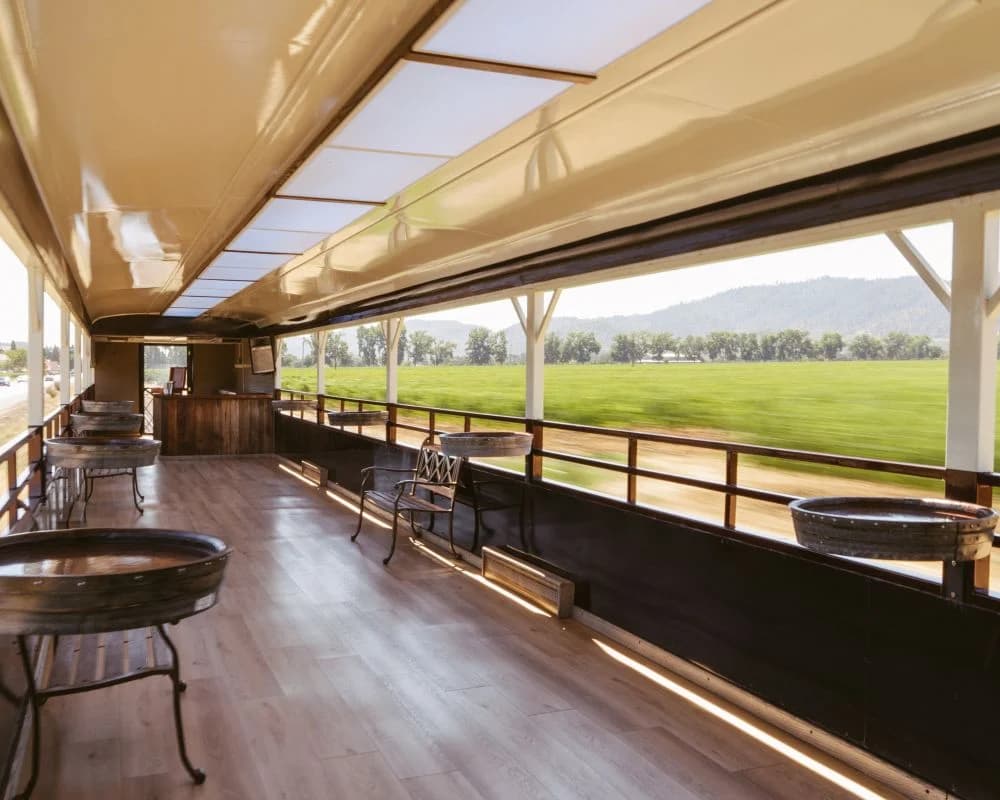
The cars themselves are the draw. These are genuinely restored antique Pullman rail cars with mahogany paneling, brass fixtures, and white tablecloths. Some routes use the Vista Dome cars, which have a curved glass roof so you can see the hillsides and vineyards without craning your neck. It feels a little like stepping into a 1920s dining car, because that's more or less what it is.
Food is cooked fresh onboard in a real galley kitchen. This surprised me the first time — I assumed it'd be catered trays reheated in a warmer, the way most "dining experiences" work. It's not. There's an actual kitchen car with actual chefs, and the food quality reflects that. Depending on the tour, you're looking at three to seven courses.
The trip takes about two to three hours for the ride-only experiences, and stretches to five, six, even seven hours for the tours that include winery stops. Plan your whole day around it. This isn't something you squeeze in before dinner.
The tours, ranked by what you get
The website lists a lot of options, and the naming isn't always obvious about what separates one from another. Here's how I'd sort them.
Gourmet Express — the default choice
This is the entry point and probably where most first-timers should start. It's the classic ride: you board in Napa, ride up to St. Helena and back, and eat a multi-course meal along the way. No winery stops — the train doesn't get off the rails, and neither do you.
There's a lunch version and a dinner version. Lunch gives you daylight, which matters a lot here because the entire appeal is watching the valley go by. Dinner gets you sunset in the warmer months and a slightly more formal mood, but in winter you'll spend part of the ride in the dark, staring at your own reflection. If you're deciding between the two, take lunch. The view is the product.
Expect three courses on this tier, wine available by the glass or bottle (usually not included in the base price — more on that below), and a couple of hours onboard. It's the least expensive way to get the core experience, and it's the one I'd book if I just wanted to try it without committing to a half-day production.
Vista Dome — pay up for the glass roof
The Vista Dome tour uses those glass-topped cars and bumps the meal up to a more elaborate multi-course affair, typically with wine pairings included. This is the upgrade that's actually worth the money, in my opinion, because the glass roof genuinely changes the experience. In the standard cars you look out side windows. In the dome, the sky and the hills are part of the room.
You're paying a solid premium over Gourmet Express for this, and the jump is real — often a hundred-plus dollars more per person. But if you're doing the train as a special occasion, an anniversary, a milestone birthday, this is the one. The food is a step up, the pours are more generous, and the whole thing feels less like a group tour and more like a private dinner that happens to be moving.
Quattro Vino — for people who actually want to taste wine
Here's a distinction that trips people up: the Gourmet Express and Vista Dome tours are dining experiences with wine. Quattro Vino is a wine tour that includes the train.
This one runs about six hours and includes stops at multiple wineries — the name references four wine experiences across the day. You ride the train part of the way, get off and tour actual estates, taste flights, and get back on. There's food, but the structure is built around visiting real wineries and drinking real flights, not just having wine brought to your table.
If your reason for coming to Napa is the wine itself — you want to walk the caves, meet the people pouring, taste things you can't get at home — this is the tour that delivers that and solves the driving problem. It's more expensive and eats your entire day. But it's the closest the train gets to a full Napa wine day with none of the logistics.
Ambassador Winery Tour — the premium wine stop version
The Ambassador tour is another train-plus-winery format, usually anchored around a stop at a specific partner estate with a more curated, higher-end tasting and a gourmet meal onboard. It's positioned above Quattro Vino in polish and price. You're getting fewer, deeper experiences rather than four quicker ones.
I'd think of this as the choice for people who don't want to feel rushed. Quattro Vino covers more ground; Ambassador slows down and goes deeper at fewer places. Both are full-day commitments and both cost real money — you're well north of the Gourmet Express price by the time you add it up.
The estate-specific tours: Castello di Amorosa and Grgich Hills
The train partners with named wineries for dedicated tours, and two worth calling out are Castello di Amorosa and Grgich Hills Estate.
Castello di Amorosa is the 13th-century-style Tuscan castle up in Calistoga. It's a full-on medieval fortress — drawbridge, moat, torture chamber, the works — that someone actually built in the 1990s and 2000s and stocked with wine. It's a spectacle, and the tour that combines the train ride with a visit there is a good pick if you're traveling with people who want the wine and a genuine attraction. Kids-of-adults who don't care about wine will still be entertained by the castle.
Grgich Hills is the opposite energy: serious, historic, no gimmicks. This is the winery whose Chardonnay won the 1976 Judgment of Paris and helped put California wine on the map. The train tour that includes a Grgich Hills stop is for people who care about that history and want to taste from a genuinely important producer. Less spectacle, more substance.
Pick between these two based on who you're traveling with. Castello is the showpiece. Grgich is the pilgrimage.
The themed and seasonal rides
Beyond the core tours, the train runs a rotating lineup of themed events, and these are hit or miss depending on what you're into. Over the year they run things like:
Murder mystery dinners, where the ride is wrapped around an interactive whodunit
A tequila-themed train that swaps wine for agave spirits
Holiday rides — the Santa Train around Christmas, plus New Year's Eve and Mother's Day and Valentine's Day specials
Beer and specialty tastings at various points in the calendar
These are worth checking if your dates line up with one, but I wouldn't build a trip around them unless the theme is genuinely the reason you're going. The murder mystery in particular is a your-mileage-may-vary situation — great with the right group, awkward if half your table would rather just eat.
What it actually costs, and where the money goes
Let's talk real numbers, because this is where people get caught off guard.
The Gourmet Express lunch is the floor, and even that runs a couple hundred dollars per person before you add anything. The Vista Dome pushes well past that. The full winery tours — Quattro Vino, Ambassador, the estate tours — land in the several-hundred-per-person range, and can approach or exceed $400 depending on the specific package and season.
Two things drive the total higher than the sticker price suggests:
Wine is often not included in the base fare. On the dining-focused tours, the meal price and the wine are separate. A bottle at your table adds up fast, and Napa bottle prices are Napa bottle prices. Read the fine print on what your tour includes — some bundle pairings, some don't. This is the single biggest source of "wait, why was my bill that high" surprise.
Gratuity and tax stack on top. Factor in service and California tax and your real number is meaningfully above the advertised one. When you're comparing tiers, compare the all-in totals, not the headline prices, or you'll misjudge the actual gap between them.
My honest read on value: the Gourmet Express is fairly priced for what it is. The Vista Dome earns its premium. The full-day winery tours are expensive but they're replacing a driver, tasting fees at multiple wineries, and lunch — so when you total up what a comparable self-planned day would cost, the gap narrows more than you'd expect.
Practical things I'd want to know before booking
Book well ahead
Weekends and anything in peak season (harvest, roughly late August through October) sell out. The specialty and holiday rides sell out even faster. If you have fixed travel dates, book the moment you know them. This is not a walk-up situation.
Dress the part, a little
There's a dress code, and it leans "smart casual" — no shorts, no flip-flops, no athletic wear on most tours. You don't need a suit, but you'll feel out of place in gym clothes. The vintage cars set a tone and the crowd generally matches it. Dressing up a notch also just makes the whole thing more fun.
Eat the pacing, not the clock
The meals are paced to the ride. Courses come out between segments of the journey so you're not eating and staring out the window at the same time. Don't show up starving expecting immediate food, and don't rush — the slowness is intentional and it's the best part. Put your phone away.
Motion and the bar car
The ride is smooth but it's still a train — there's gentle movement, and walking between cars means walking through the connections. If you're prone to motion sickness, the domed upper level moves a touch more than the lower dining level. Nothing dramatic, but worth knowing. There's also a lounge/bar car on many configurations if you want to stand up, stretch, and get a different vantage point mid-trip.
Getting there and parking
You board in downtown Napa, and there's parking at the station, which removes one more logistics headache. If you're staying in Napa proper, you might not even need to drive. Give yourself a buffer for check-in — they board on a schedule and the train genuinely leaves without stragglers.
Who should book which tour
Let me make this concrete, because that's what I actually want when I read a piece like this.
First-timer testing the waters: Gourmet Express, lunch seating. Lowest commitment, best light, real food, you'll know by the end whether you'd upgrade next time.
Special occasion, wants to be impressed: Vista Dome. The glass roof and the elevated meal are worth the jump for an anniversary or milestone.
Serious about wine, wants a real tasting day: Quattro Vino or Ambassador. You get the wineries, the flights, and the caves without needing a designated driver.
Mixed group, some who don't care about wine: The Castello di Amorosa tour. The castle keeps everyone engaged even if they're not tasting.
Wine history nerd: The Grgich Hills tour. You're tasting from a producer that changed the industry.
Traveling on specific dates around a holiday: Check the seasonal calendar first — a themed ride might be the better use of the same day.
The real takeaway
The mistake I see people make with the Wine Train is treating it like a shuttle — a clever way to get from A to B while drinking. It isn't. The train doesn't take you anywhere you needed to go. It takes you up the valley and back to where you started, slowly, and that pointlessness is exactly the value. You're paying to have three or four hours where the only thing on your agenda is looking out a window, eating something someone cooked from scratch, and not thinking about who's driving.
If you're the kind of person who needs a day to be efficient, you'll resent the price and the pace. Skip it and hire a driver. But if you can let a day be genuinely unproductive — if you can sit still while the vineyards slide past and let a meal take two hours — the Wine Train is one of the few packaged experiences in Napa that delivers exactly what it promises. Book the lunch, take the earlier seating, and don't check your email until you're back at the station.