
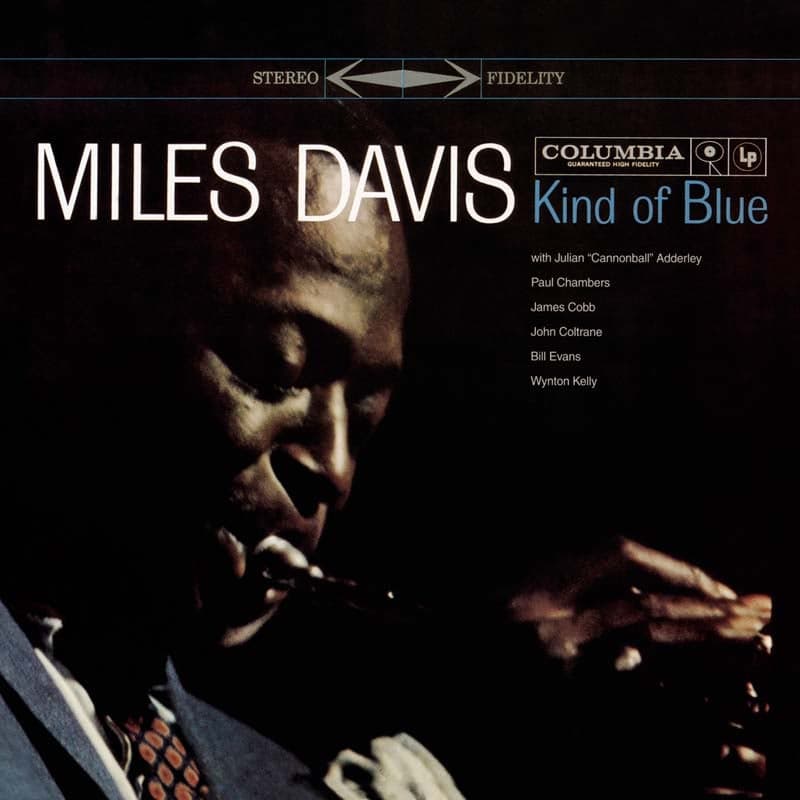
Most albums that sell millions of copies are built to sell millions of copies. They're focus-grouped, polished, and safe. Kind of Blue is the opposite. Miles Davis walked into Columbia's 30th Street Studio in 1959 with almost no written music, handed his band a few sketches, and told them to play. What came out is the best-selling jazz record ever made, and it's still selling. Over five million copies in the U.S. alone. It goes platinum again every few years without a marketing push.
That gap between how it was made and how it performs has fascinated me for years. I build things for a living, and everything about my job pushes toward planning, iteration, and control. Kind of Blue is a monument to the opposite instinct. It's proof that constraint and trust can produce something more durable than polish ever will. So I want to actually dig into why this record works, how it got made, and what it still teaches anyone who creates things for other people.
The record everyone owns and nobody skips
Here's the strange part. Kind of Blue is the jazz album people who don't listen to jazz own. It's the gateway drug. It sits in record collections next to Fleetwood Mac and Michael Jackson, owned by people who couldn't name a second Miles Davis album if you paid them.
Normally that's a red flag. The most popular version of anything is usually the watered-down version. The pop-crossover jazz. The greatest-hits compilation. But Kind of Blue isn't a compromise. It's one of the most influential and forward-looking records of its era, and it happens to also be the accessible one. That almost never happens. Usually you get influential-but-difficult or popular-but-shallow. This is both at once.
Part of it is the mood. The whole album has a cool, unhurried, late-night feel. Nothing is aggressive. Nothing demands anything from you. You can put it on while you cook dinner or you can sit down and study every solo, and it rewards both. That's a rare quality. Most great art punishes passive listening. Kind of Blue lets you in at whatever depth you show up with.
What actually made it different
To understand why this record mattered, you have to understand what came before it. Jazz in the 1950s was largely built on chord changes. Bebop, which Miles helped pioneer with Charlie Parker in the '40s, was dense and fast. Players ran through complicated chord progressions, and a solo was partly a technical feat — could you navigate all those changes at tempo and still say something?
By the late '50s, Miles was bored with that. He felt the chords had become a cage. The more complex the harmony got, the less room there was to breathe. So he moved toward something called modal jazz.
Modal jazz in plain terms
You don't need theory to feel the difference, but a little helps. In traditional jazz, a tune might move through dozens of chords in a few minutes. Every couple of beats, the harmonic ground shifts under the soloist. Modal jazz throws most of that out. Instead of racing through changes, a piece might sit on a single scale, or mode, for eight, sixteen, or more bars.
Take "So What," the opening track. Its structure is famously simple. It stays on one mode for sixteen bars, moves up a half step for eight, then drops back. That's basically the whole harmonic map. Compare that to a bebop tune stuffed with substitutions and you're in a different world.
What this does is shift the burden. When you're not fighting through chord changes, you can't hide behind technical navigation. You have to actually be musical. You have to make melody, shape, and space matter. The scale gives you room, and what you do with that room is entirely on you. It's a scarier way to play, and a more honest one.
I think about this constantly with my own work. When you strip away complexity, you can't lean on it anymore. A landing page with one clear message and lots of whitespace is far harder to get right than a busy page crammed with features. The empty space exposes you. Kind of Blue is empty space done by masters.
The band Miles put in that room
A great idea with the wrong people is nothing. What makes Kind of Blue is who was standing in the studio.
Miles assembled a sextet that reads like a fantasy lineup, though at the time several of them were still building their reputations. Every single one of them went on to shape the music.
Miles Davis on trumpet, leading with that spare, vocal, deeply human tone. He never played more notes than he needed. His restraint is the whole point.
John Coltrane on tenor sax, right on the edge of the explosion that would define the next decade. His solos here are searching and dense, the counterweight to Miles.
Cannonball Adderley on alto sax, bringing blues and joy. Where Coltrane probes, Cannonball sings.
Bill Evans on piano, whose harmonic sensibility shaped the album's whole feel. He was classically trained, introspective, and his voicings are the color underneath everything.
Paul Chambers on bass, the anchor. That famous "So What" bass line is his.
Jimmy Cobb on drums, the pulse, playing with taste and patience. He was the last surviving member, and he lived until 2020.
There's a detail worth pausing on. Bill Evans had actually left Miles's band before these sessions. Wynton Kelly was the regular pianist by then, and Kelly plays on one track, "Freddie Freeloader." But Miles brought Evans back specifically for this record because he wanted Evans's particular sound and his understanding of the modal concept. Evans's fingerprints are all over the composition and mood, especially on "Blue in Green."
That's a leadership decision I respect. Miles knew exactly what texture he needed and he went and got the right person for it, even though it meant a more complicated arrangement. He wasn't precious about consistency. He was ruthless about the result.
Recorded almost live, almost first take
This is the fact that stops people cold. The musicians had barely seen the material before they recorded it.
Miles brought in sketches. In some cases the band saw the scales and the basic frame for the first time in the studio. There was no rehearsal in the way we'd think of it. Miles would explain the concept, count it off, and they'd play. Most of what you hear on the final album is a first or second take.
Bill Evans wrote in the original liner notes about a Japanese painting technique where the artist paints on thin parchment with a brush, and any hesitation or correction shows. There's no going back, no fixing. The painting has to be spontaneous and complete in one pass. He compared the album to that. It's a perfect description.
Think about what that requires. Six musicians, minimal preparation, one shot, and the result is a record that holds up as a masterpiece sixty-plus years later. That doesn't happen because they got lucky. It happens because every player was operating at an absurd level, and because the constraints forced total presence. Nobody could coast. Nobody could plan their solo in advance because they didn't know where the tune was going.
Why the "mistakes" stayed in
Because they were recording live to tape with little overdubbing, small imperfections made it onto the record. There's a slight speed inconsistency on some early pressings — three tracks on the first side were recorded with a tape machine running slightly fast, so they play back a hair sharp. This got corrected on later remasters. There are moments of hesitation, breath, and human looseness throughout.
And it doesn't matter. If anything, it's part of why the album feels alive. We've spent decades since then learning how to remove every imperfection from recorded music, and the result is often that the music sounds dead. Kind of Blue has the sound of people making decisions in real time. You can hear them listening to each other. That's the thing you can't fake and can't overdub in later.
Going track by track
The album is only five tracks, but each one does something distinct. It's worth walking through because the sequencing is part of the genius.
So What
The opener and the most famous piece. It starts with a loose, almost ambiguous intro from Evans and Chambers before the band settles into that call-and-response head, where the bass states the melody and the horns answer with two chords. Then it opens up into solos. Miles goes first, cool and economical. Coltrane follows, more urgent. Cannonball brings the blues. It's the perfect statement of the modal idea, and it's endlessly listenable.
Freddie Freeloader
A twelve-bar blues, so more traditional in form than the rest, and the one track with Wynton Kelly on piano. Kelly's touch is funkier and more grounded than Evans's, which suits the tune. It's the album at its most relaxed and swinging. Named, reportedly, after a Philadelphia bartender who hung around the musicians.
Blue in Green
The most fragile and melancholy piece on the record. This is where Bill Evans's influence is most obvious — there's long been debate about how much of it he actually composed, with Evans claiming significant authorship while Miles took the credit. It's short, spare, and hauntingly beautiful. A ballad in the truest sense.
All Blues
Back to blues, but in a rolling 6/8 time that gives it a hypnotic, swaying quality. The horns play a soft, repeated figure while the soloists take turns. It's the track I'd hand someone who says they don't get jazz. There's a groove you can sink into immediately, and the solos build without ever getting frantic.
Flamenco Sketches
The closer, and the most purely modal piece. It's built on a series of five scales, and each soloist moves through them at their own pace, staying on each mode as long as they want before moving to the next. There's no fixed length. It's the fullest expression of the album's whole idea — the structure is a loose frame, and the music lives inside the players' choices. It ends the record on a note of quiet, open-ended calm.
Why it still sells
Records date. The vast majority of popular music from 1959 sounds like 1959. It's a period piece. Kind of Blue doesn't sound like a period piece. It sounds like it could have been recorded last week in a good room with good players.
I think there are a few reasons for that, and they're the same reasons anything lasts.
It's built on fundamentals, not trends
Modal jazz wasn't a fad Miles was chasing. It was a return to something basic — melody, space, feel — after a period of increasing complexity. When you build on fundamentals, you don't age with the trend, because you were never on the trend. This is true in design too. The sites and interfaces that hold up aren't the ones that chased whatever was hot that year. They're the ones built on clarity, hierarchy, and restraint. Fashion dates instantly. Fundamentals don't.
It leaves room for the listener
Because the music is spacious, you bring yourself to it. It doesn't dictate a mood so hard that it only works in one context. It's a blank enough canvas that it fits your Sunday morning, your late-night work session, your dinner party. That flexibility is why it keeps finding new owners across generations. It's not tied to a scene or a moment.
It was made by people at the top of their craft, with nothing to prove and nothing to hide
You can hear the confidence. Nobody is showing off. Miles in particular plays with a kind of authority that only comes from being completely secure in what you're doing. There's no anxiety in the record, no reaching. That calm is contagious, and it's timeless because insecurity is what dates work. When you can hear someone trying too hard, you can date it. When you can hear someone at ease, it floats free of time.
What a jazz record teaches about making anything
I didn't expect an album from 1959 to change how I think about client work, but it did. A few lessons keep coming back.
Constraints force quality. The band had no time, no charts, and no safety net. That's exactly why the record is great. When I'm tempted to add another feature, another section, another option, I try to remember that removing the safety net usually improves the work. Give yourself less room to hide and you'll make sharper decisions.
Hire people better than you and get out of their way. Miles didn't over-direct Coltrane and Cannonball. He set the frame and trusted them to fill it. The best projects I've been part of worked the same way. You define the concept clearly, bring in the right people, and then you don't micromanage the parts they know better than you.
Space is a feature, not a gap. The silence and restraint on Kind of Blue is doing work. In design, whitespace isn't emptiness waiting to be filled — it's what makes the important things readable. Miles understood the note you don't play matters as much as the one you do. Most of us need that reminder constantly.
Ship it while it's alive. They kept the first takes. They didn't polish the humanity out of it. There's a real temptation to endlessly refine, to sand down every rough edge until the thing is technically perfect and emotionally dead. Kind of Blue is the argument for capturing the living version and letting it stand.
If you've never actually sat down with this record — not as background, but with your full attention — do it. Put it on, close the laptop, and listen to "So What" from the top. Notice how much space there is. Notice how few notes Miles plays and how much each one says. Then think about whatever you're building right now, and ask yourself what you could take away instead of add. That's the real lesson buried in the best-selling jazz album of all time. The magic was never in the complexity. It was in the confidence to leave things out.